
English


Views: 0 Author: Site Editor Publish Time: 2026-09-15 Origin: Site


Many homeowners hesitate when setting up a garden irrigation schedule for the very first time. Running an automated system for a full hour feels like it should consume far more water than blasting traditional overhead sprinklers for fifteen minutes. This common buyer hesitation makes perfect sense at a quick glance. We naturally associate longer watering times with higher water bills.
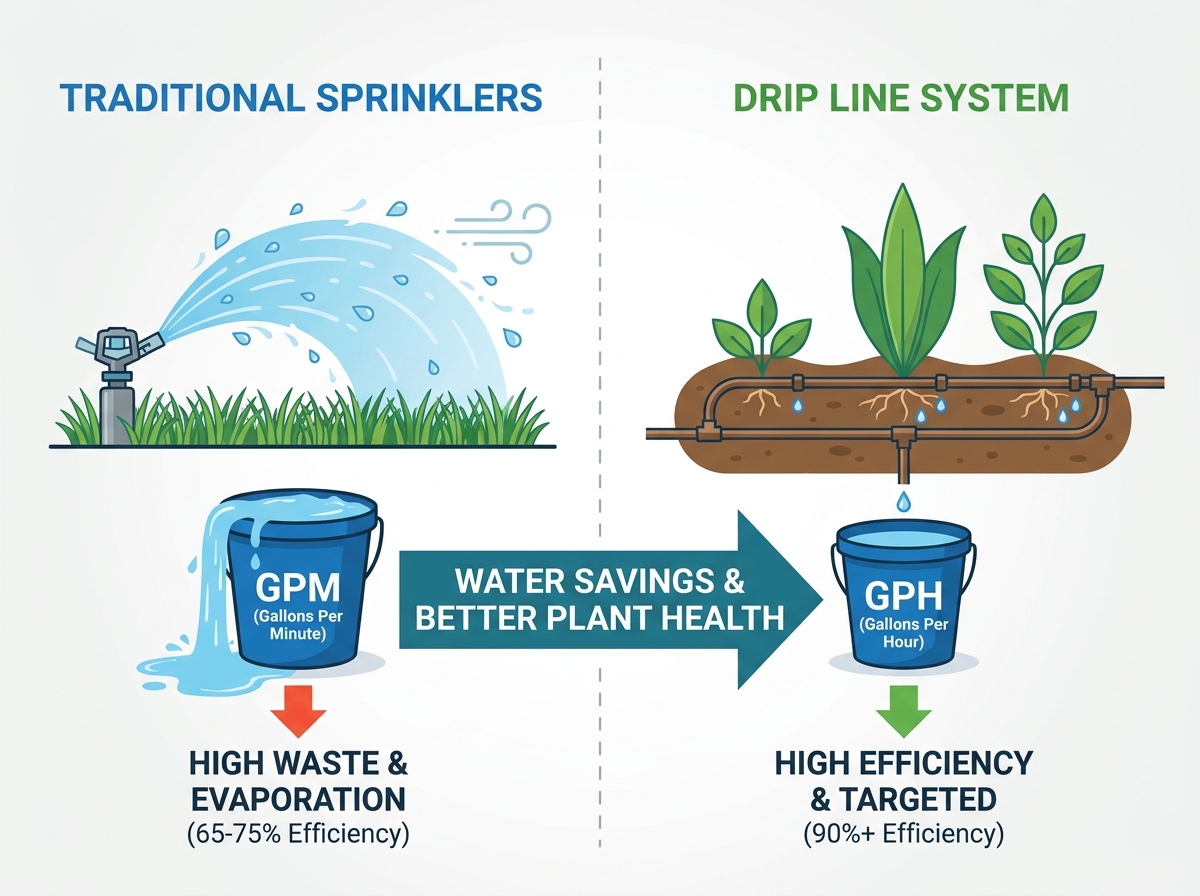
However, comparing these two irrigation methods by time alone creates a massive misconception about resource management. To understand actual usage, you must distinguish between Gallons Per Minute (GPM) and Gallons Per Hour (GPH). If you fail to recognize this fundamental difference, you risk abandoning the most efficient watering method available.
A properly designed system remains the absolute gold standard for water-efficient agriculture and residential landscaping. Its actual consumption depends entirely on your system design, local soil type, and active management. We will break down exactly how flow rates work, explore the core variables dictating your usage, and show you how to maximize plant health while drastically reducing your utility bill.
High Efficiency: Drip lines deliver water at 90%+ efficiency, minimizing evaporation and runoff compared to traditional sprinklers (65-75% efficiency).
Low Flow, High Duration: Drip systems use Gallons Per Hour (GPH) rather than Gallons Per Minute (GPM), meaning longer run times actually consume significantly less total water.
Variable Consumption: Total water use is dictated by emitter flow rates, soil type, plant requirements, and seasonal weather changes.
Implementation Risk: Without a pressure regulator, smart timer, or proper maintenance, a poorly installed drip line can negate potential water savings.
Let us look closely at the underlying math. Traditional sprinkler systems push enormous volumes of water in a very short window. A standard rotary sprinkler head easily sprays 1 to 5 gallons per minute. If you run a small lawn zone with just ten sprinkler heads for fifteen minutes, you easily consume hundreds of gallons. You apply this water rapidly, often faster than the ground can absorb it.
Contrast this rapid delivery with standard drip line emitters. These tiny devices are meticulously engineered for slow release. They operate using Gallons Per Hour (GPH). Typical residential flow rates sit at 0.5, 1.0, or 2.0 gallons per hour. If you run a single 1.0 GPH emitter for an entire hour, you consume exactly one gallon of water. You could run a massive garden array for hours and still use less total water than a brief morning sprinkler cycle.
We must also examine evaporation and runoff metrics. Traditional overhead watering loses up to 30% of its total volume to the atmosphere. Wind blows the mist away from your garden beds. The hot morning sun evaporates droplets before they ever penetrate the topsoil. Drip irrigation completely bypasses these aerodynamic losses. It applies moisture directly to the base of the plant. It saturates the root zone instantly.
This targeted application provides an incredible secondary benefit. Sprinklers spray water indiscriminately across sidewalks, empty dirt patches, and pathways. They water empty spaces where nothing grows. Drip systems eliminate this wasted coverage. You only water specific plant root zones. By keeping the surrounding dirt dry, you actively starve invasive weeds of the moisture they need to germinate.
Irrigation Method | Measurement Unit | Typical Flow Rate | Estimated 60-Minute Water Use (Per Head/Emitter) |
|---|---|---|---|
Standard Rotor Sprinkler | Gallons Per Minute (GPM) | 2.0 GPM | 120 Gallons |
Standard Spray Sprinkler | Gallons Per Minute (GPM) | 1.5 GPM | 90 Gallons |
High-Flow Drip Emitter | Gallons Per Hour (GPH) | 2.0 GPH | 2.0 Gallons |
Standard Drip Emitter | Gallons Per Hour (GPH) | 1.0 GPH | 1.0 Gallon |
Low-Flow Drip Emitter | Gallons Per Hour (GPH) | 0.5 GPH | 0.5 Gallons |
Total water consumption is rarely a static number. Selecting the correct emitter flow rate dictates your baseline usage from day one. You cannot just pick a random emitter off the hardware store shelf. Heavy clay soils absorb water very slowly. If you use a high-flow emitter, the water will pool on the surface and run off. You need a 0.5 GPH emitter for clay. Conversely, sandy soils drain exceptionally fast. They require 2.0 GPH emitters to spread the moisture horizontally before it sinks past the roots.
Soil composition plays a fascinating role here. We call this capillary action. Different soil particles pull water in different directions. Clay particles are microscopic and tightly packed. They pull water sideways, creating a wide, shallow wet zone. Sand particles are large and loose. Gravity pulls the water straight down, creating a narrow, deep wet zone. You must match your emitter volume to this natural soil behavior.
Plant type and root depth add another crucial variable. Shallow-rooted vegetables like lettuce dry out quickly. They require short, frequent watering sessions. Deep-rooted perennial shrubs and mature trees operate differently. They need massive volumes of water delivered slowly over many hours. Zoning these vastly different plants on separate lines prevents disastrous overwatering. You cannot hydrate a tomato plant and an oak tree on the exact same schedule.
Finally, your local climate and Evapotranspiration (ET) rates determine how often you run the system. ET measures how fast moisture evaporates from the soil and transpires from plant leaves. High temperatures, low humidity, and strong winds create high ET rates. A scorching summer heatwave demands significant seasonal adjustments to your baseline watering schedule. You must dial back the frequency when autumn weather arrives.
Upgrading your garden plumbing requires buying several specific components. You will purchase rolls of poly tubing, pressure regulators, screen filters, digital timers, and bags of emitters. This upfront component cost can intimidate casual gardeners. However, you must evaluate this initial investment against your projected long-term utility savings. Municipal water rates continue to climb globally. Slashing your outdoor water consumption by half quickly pays off the hardware costs within a few growing seasons.
We must transparently discuss system longevity and maintenance expectations. Above-ground poly tubing does not last forever. Ultraviolet light from the sun slowly degrades the plastic. You can typically expect a lifespan of 5 to 10 years before the main lines turn brittle. You will face minor ongoing costs. You might need to replace clogged emitters or splice punctured lines. Fortunately, these small plastic repair parts cost mere pennies.
Many homeowners ignore local compliance and rebate opportunities. Municipalities facing severe drought restrictions actively want you to abandon overhead sprinklers. They frequently offer cash rebates or utility bill credits for upgrading to targeted drip irrigation. Check your local water district website before you buy supplies. Qualifying for a local rebate program dramatically improves the immediate return on your landscaping investment.
Despite their high efficiency rating, poor installation quickly turns these setups into massive water-wasters. The most common mistake is the missing pressure regulator. Standard municipal outdoor spigots output between 50 and 70 PSI of pressure. Micro-irrigation tubing operates safely at 25 to 30 PSI. If you hook your lines directly to the spigot without a regulator, you will cause blowouts. Emitters will pop off the plastic tubing. Water will gush freely into the dirt.
Homeowners often fall into the "set it and forget it" trap. They buy a standard digital timer and program a heavy, peak-summer watering schedule in July. Then, they completely forget about it. They leave this heavy schedule running during cool, rainy spring months or crisp autumn weeks. Overwatering during dormant seasons completely negates your potential water savings. You must use seasonal timer adjustments or upgrade to smart weather-based controllers.
Incorrect emitter spacing and capacity choices create invisible waste. Placing high-flow 2.0 GPH emitters on native, low-water desert plants drowns the root system. Combining vastly different plant hydration needs onto a single irrigation zone forces you to overwater one plant just to keep another alive. You must tailor the output to the specific biological needs of the plant sitting beneath the dripper.
Neglecting routine system audits allows minor leaks to dump hundreds of gallons silently. Rodents frequently chew through thin plastic micro-tubing to access water during summer droughts. End caps blow off due to pressure spikes. If you do not inspect your garden, these leaks hide under mulch for weeks.
We highly recommend following a simple monthly audit checklist:
Turn the system on manually and listen for loud hissing sounds near the main valve.
Inspect the pressure regulator and filter housing for slow drips.
Walk the entire perimeter of the poly tubing to check for rodent chew marks.
Verify every single figure-eight end cap remains tightly secured.
Watch the emitters for five minutes to ensure steady dripping rather than shooting streams.
You can push your system past standard efficiency by making smart hardware choices. Always invest in Pressure-Compensating (PC) emitters. Standard non-PC emitters lose pressure the further they travel down the tubing. The first plant gets too much water, and the last plant gets a tiny trickle. PC emitters contain internal silicone diaphragms. They ensure the first plant on the line gets the exact same amount of water as the last plant. You no longer have to overwater the beginning of your garden.
Implement smart controllers to eliminate human error. We recommend pairing your system with Wi-Fi-enabled digital timers. These modern controllers connect directly to local weather station data. They automatically adjust watering durations based on current temperature forecasts. They will actively pause the schedule if heavy rainfall is predicted. This proactive weather monitoring prevents you from running the system during a thunderstorm.
You must install a high-quality filter at the water source. We recommend a 150-mesh screen filter for residential setups. Municipal water often contains hard mineral deposits. Well water contains microscopic sand and silt. These tiny particles quickly clog the tiny plastic pathways inside an emitter. Clogged emitters lead to uneven watering, dry spots, and eventual system failure. Flushing a screen filter takes two minutes and guarantees long-term reliability.
Finally, utilize a strict zoning strategy. Dividing your landscape into dedicated hydro-zones prevents wasted resources. You group plants with similar water needs onto identical valve schedules.
Zone 1: Lawn areas and large grass patches requiring traditional overhead sprinklers.
Zone 2: Thirsty, shallow-rooted vegetable beds running on dedicated, daily drip schedules.
Zone 3: Native, drought-tolerant shrubs needing very infrequent, deep soil soaking.
Zone 4: Potted patio plants requiring frequent, low-volume micro-sprayers.
We can confidently state that properly engineered micro-irrigation systems do not use a lot of water. In fact, they are actively designed to use the absolute least amount of water possible. By applying slow, measured drops directly to the root zone, you maximize plant health while virtually eliminating evaporation and wind drift.
Your ultimate water savings will always depend on correct component selection and proper installation. You must protect your setup with pressure regulators and mesh filters. Furthermore, active management prevents the system from running needlessly during rainstorms or cooler seasons.
Take a few moments to evaluate your current landscape zones. Check your soil type and map out your varied plant needs. If you feel unsure about flow rates, consult an irrigation specialist for a customized layout. Alternatively, you can browse our high-efficiency, pressure-compensating starter kits and contact us today to build the perfect conservation-focused garden setup.
A: No, it typically reduces it by 30-50% compared to traditional sprinklers, assuming the timer is programmed correctly based on GPH.
A: It depends on the emitter's GPH and the plant's needs, but typically ranges from 30 minutes to 2 hours per session, less frequently than overhead watering.
A: Drip lines are significantly cheaper to run in terms of water utility costs due to their 90%+ application efficiency.
A: Yes. Even at a low flow rate, over-saturation removes oxygen from the soil, leading to root rot and wasted water. Timers are essential.


