English


Views: 0 Author: Site Editor Publish Time: 2026-08-06 Origin: Site


Irrigators often face a frustrating reality in the field. Plants near the water source drown, while those at the far end of the row barely survive. This inconsistent water delivery plagues both large commercial farms and backyard residential gardens. It leads to wasted resources and significantly reduces crop yields. A pressure compensating drip line solves this precise issue directly. It acts as specialized irrigation tubing featuring internal emitters engineered to balance output perfectly. These advanced emitters deliver a highly uniform flow rate across drastically varying pressures and rolling topographies.
Our comprehensive guide aims to help system designers and property owners evaluate this irrigation technology. We will explore whether the added investment makes sense for your specific landscape design, continuous run length, or demanding agricultural setup. By the end, you will know exactly when to upgrade your irrigation infrastructure. You will also understand when standard components suffice for your specific watering needs.
Pressure compensating drip lines ensure identical water output from the first emitter to the last, regardless of elevation changes or pressure drops along the line.
They are structurally necessary for sloped terrain, commercial-scale long runs, and high-precision agricultural applications.
Internal silicone diaphragms regulate the flow, but they require strict minimum operating pressures (usually 10-15 PSI) and proper filtration (150-200 mesh) to prevent clogging.
Choosing between PC and standard (non-PC) drip line comes down to calculating total linear footage and analyzing site topography.
Standard irrigation tubing loses internal water pressure due to friction. This physical reality occurs as water travels further down the line. Fluid drags against the inner polyethylene walls. This constant friction creates internal turbulence. The turbulence consumes kinetic energy, which causes dynamic pressure to drop significantly. Because of this pressure loss, standard emitters produce heavily reduced flow rates at the end of a long run. Your first plant might receive two gallons per hour. Your last plant might receive a mere trickle. This forces growers into a difficult compromise. You must overwater the front of the line just to keep the end of the line alive.
A pressure compensating emitter uses brilliant internal engineering to combat friction loss. Engineers place a highly flexible silicone or rubber diaphragm inside each individual emitter. This small component actively adapts to the surrounding water pressure. When internal water pressure increases, the diaphragm compresses downward. This physical compression restricts the internal flow path. Conversely, when internal water pressure drops near the end of the line, the diaphragm relaxes. This relaxation opens the flow path wider. The mechanism constantly adjusts itself every single second. It guarantees every plant receives the exact same volume of water.
Manufacturers design these diaphragms to hit specific flow targets. Regardless of input fluctuations, the output remains absolutely constant. This works beautifully provided the system stays within the manufacturer's specified pressure range. This range typically falls between 10 and 50 PSI. As long as you meet these parameters, the emitter strictly delivers its rated output. You can purchase tubing rated exactly at 0.5 GPH, 0.9 GPH, or 1.0 GPH. A 1.0 GPH emitter will deliver exactly one gallon per hour at 15 PSI. It will also deliver exactly one gallon per hour at 45 PSI. This incredible predictability allows for highly accurate watering schedules.
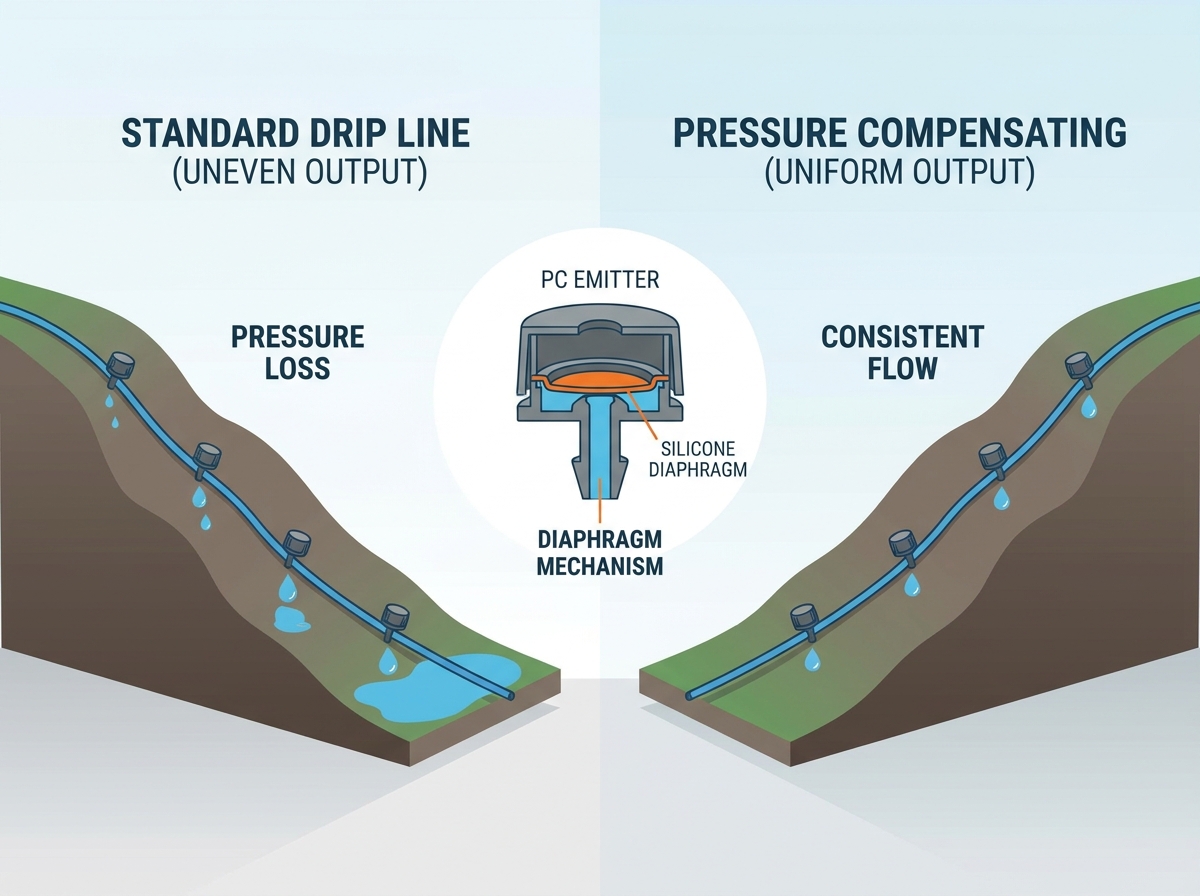
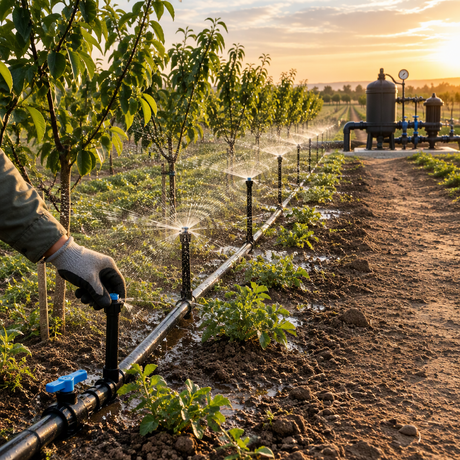
Elevation changes wreak havoc on fluid dynamics. Gravity pulls water down. This causes massive pressure spikes at the bottom of a hill. It simultaneously causes extreme pressure drops at the top. PC tubing is absolutely essential for uneven, hilly, or sloped landscapes. It completely prevents water from pooling destructively at the bottom of a grade. It also eliminates chronic dry spots at the highest elevations. Conversely, standard tubing performs adequately for perfectly flat environments. You can confidently use non-PC products for small garden beds. They also work exceptionally well for level greenhouse benches where gravity exerts uniform force.
The physical length of your irrigation zone dictates your technology choice. PC tubing supports significantly longer continuous runs. You can lay hundreds of feet of continuous tubing across a commercial orchard. It will never sacrifice output uniformity at the very end of the line. Standard tubing lacks this impressive capability. It remains strictly limited to short, highly localized runs. Pushing standard tubing past its length limit introduces severe friction loss. This friction loss immediately causes highly uneven watering. You risk severe plant dehydration if you stretch standard tubing too far.
We must acknowledge the initial price premium of PC technology. These complex emitters cost more to manufacture than standard punched holes. However, the return on investment justifies the higher upfront cost in complex setups. Commercial farms and intricate residential designs see immediate benefits. First, lower plant mortality rates save significant replacement money. Second, you maintain strictly controlled water usage. This lowers municipal utility bills dramatically. Third, you eliminate fertilizer runoff. This protects the local watershed while keeping nutrients exactly where crops need them.
System Comparison Framework
Application Factor | Pressure Compensating (PC) | Standard (Non-PC) |
|---|---|---|
Terrain Suitability | Sloped, uneven, or hilly landscapes. | Strictly flat, level surfaces. |
Max Run Length | Supports long commercial runs (200-400 ft). | Limited to short residential runs (under 50 ft). |
Water Uniformity | Identical output across the entire zone. | Higher output near source, lower at the end. |
Upfront Cost | Higher initial investment per foot. | Highly economical and budget-friendly. |
Many beginners misunderstand the term "pressure compensating". This term does not mean the system works perfectly under zero pressure. The tubing still requires a strict baseline pressure to function properly. You typically need a minimum of 10 to 15 PSI to activate the internal diaphragms. If your system pressure falls below this critical threshold, the diaphragms simply will not open. The emitters will barely drip. Always test your static water pressure before purchasing materials. Gravity-fed rain barrel systems rarely generate enough baseline pressure to activate these complex internal mechanisms.
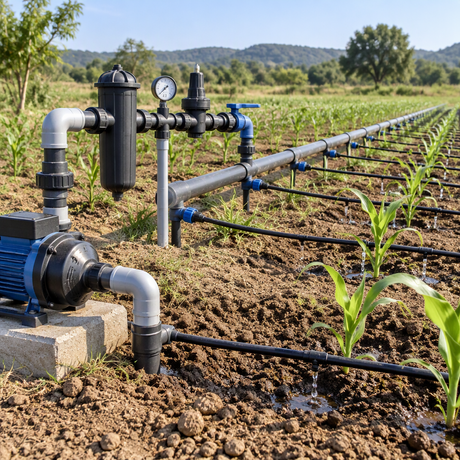
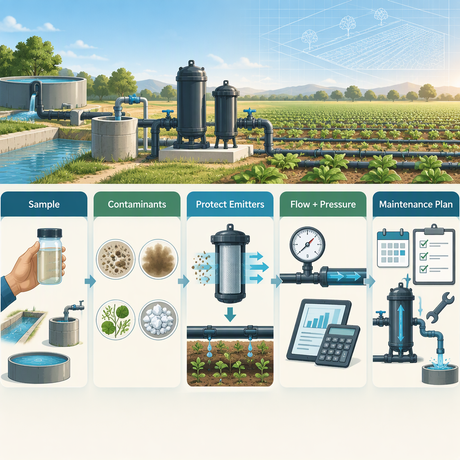
PC emitters contain incredibly intricate internal labyrinth paths. These tiny paths slow the water down before it reaches the diaphragm. Unfortunately, these micro-paths make the emitters highly susceptible to sediment clogging. Sand, algae, and mineral scale can permanently ruin an expensive system. We consider proper filtration a mandatory system component. You must install a high-quality Y-filter or screen filter. Professionals strongly recommend using a 150 to 200 mesh screen. Clean this filter routinely throughout the growing season. A neglected filter reduces flow and essentially destroys your irrigation investment.
Cold climates introduce another severe technical challenge. The internal silicone diaphragms create small pockets inside the tubing. These pockets easily trap tiny amounts of water after the system shuts off. This trapped water presents a massive freezing risk during winter months. As water freezes, it expands violently. This expansion will permanently fracture the plastic emitters. Proper blowout procedures remain absolutely critical in freezing climates. You must use an air compressor to clear the lines every autumn. However, you must regulate the compressor pressure carefully. Keep the air pressure below 40 PSI to avoid blowing the emitters apart from the inside.
Selecting the correct flow rate requires a basic understanding of your native soil composition. Water moves through different soil types at vastly different speeds. Matching your emitter output to your soil's natural capillary action prevents massive water waste.
Heavy clay soils: Choose 0.4 to 0.5 GPH emitters. Clay absorbs water extremely slowly. A low flow rate prevents surface runoff and allows for slow, deep root absorption.
Loamy soils: Choose 0.9 to 1.0 GPH emitters. This represents the standard baseline for most garden soils. Loam absorbs water steadily and evenly.
Sandy soils: Choose 2.0 GPH emitters. Sand drains water almost instantly. You need a fast output to wet the soil completely before gravity pulls the water safely past the root zone.
Tubing manufacturers pre-install emitters at fixed intervals. You must select the correct spacing for your specific crop types. We rely on clear spacing benchmarks for success. Use 12-inch spacing for dense ground cover. This tight spacing also works beautifully for raised vegetable beds. The close emitters create a solid band of moisture underground. Choose 18-inch to 24-inch spacing for large shrubs or less dense plantings. Stretching the spacing saves money and directs water only where large root balls actually reside.
Irrigation tubing comes in several standard diameters. Choosing the wrong size ruins system performance. Use 1/2-inch tubing for your main continuous runs. This larger diameter handles higher water volumes seamlessly. Commercial agricultural applications often scale up to 5/8-inch or 3/4-inch poly tubing for massive fields. Conversely, you should use 1/4-inch micro-tubing strictly for short branching. Never run 1/4-inch tubing longer than 30 feet. The extreme friction inside this tiny pipe will choke the water supply quickly. Use it only to reach individual pots or tightly clustered accent plants.
You still need a mainline pressure regulator even when using pressure compensating emitters. This confuses many novice installers. They assume the tubing regulates the entire system. This assumption is completely false. The emitters only regulate individual water output. A mainline pressure regulator protects the structural integrity of your physical fittings. City municipal water often arrives at 70 to 80 PSI. This massive force will literally blow your barbed fittings apart. Install a mainline regulator set between 25 and 30 PSI at the very beginning of your zone. This simple device ensures the physical tubing survives for decades.
Commercial-grade installations require additional protective hardware. Sloped terrain introduces a hidden danger called the vacuum effect. When your irrigation timer shuts off, water quickly drains down to the lowest elevation. This rapid draining creates a powerful vacuum at the top of the hill. This vacuum will forcefully suck wet soil and mud directly into the highest emitters. The mud permanently clogs the silicone diaphragms. You must install air relief valves at the absolute highest point of your sloped system. These valves open automatically when the system shuts down. They allow harmless air to enter the line, completely breaking the destructive vacuum.
Manufacturing debris routinely sneaks into new tubing rolls. You must clear this debris before you pressurize the system for the very first time. We recommend the following strict flushing sequence to protect your investment.
Leave all end-caps completely off the tubing during the initial layout phase.
Turn on the main water supply to full volume for several continuous minutes.
Watch the open ends closely to ensure perfectly clear water runs out.
Shut off the main valve entirely before securing the plastic end-caps.
Pressurize the system again to inspect the entire line for potential leaks.
If you need help designing your commercial layout or sourcing specific parts, feel free to contact us for expert guidance and technical support.
A pressure compensating drip line represents a brilliant engineering solution to the unrelenting physics of water pressure loss and gravity. It removes the guesswork from complex irrigation layouts. The internal diaphragm technology guarantees that your entire crop receives optimal hydration from start to finish. You no longer have to sacrifice the health of plants at the end of a long row.
Your final decision logic remains straightforward. If your upcoming project involves sloped terrain, runs longer than 50 to 100 feet, or precise agricultural watering, PC tubing is the non-negotiable standard. It ensures uniformity and protects your expensive landscaping investment. Standard tubing should remain reserved strictly for small, perfectly flat residential garden boxes.
Your next step requires minor field research. Measure your total continuous linear run length using a simple tape measure. Test your outdoor spigot PSI using an inexpensive threaded pressure gauge. Finally, select your required flow rate and emitter spacing based on your native soil type. Armed with this exact data, you can build a resilient, highly efficient irrigation system.
A: Yes. You must install a pressure regulator. The internal emitters only regulate individual water flow. They do not reduce the overall system pressure. High city water pressure can easily blow out your physical fittings. A system-wide regulator protects the entire tubing structure from sudden municipal pressure spikes.
A: We highly discourage this practice. Mixing these technologies makes flow calculations nearly impossible. Standard emitters change output based on internal pressure. PC emitters maintain a strictly fixed output. Combining them on one single zone causes highly uneven watering schedules. You will likely overwater some plants while severely dehydrating others.
A: Several common issues stop emitters from dripping. First, check your baseline system pressure. It might fall below the minimum activation threshold. This threshold usually sits around 10 to 15 PSI. Second, inspect your system filter. A clogged filter severely restricts necessary flow. Finally, look for physical kinks in the upstream tubing.
A: Standard engineering limits typically range from 200 to 400 feet for half-inch tubing. This maximum length depends heavily on your chosen GPH and specific emitter spacing. Pushing beyond this absolute limit causes problems. The internal water pressure will eventually drop below the diaphragm's minimum activation point. This leads to flow failure.