English


Views: 0 Author: Site Editor Publish Time: 2026-10-24 Origin: Site


Discovering dry patches or dying plants despite having an active irrigation system frustrates any grower. You invest significant time and resources into watering. Yet, certain zones simply dry up. Uneven growth quickly signals a hidden infrastructure failure.
Clogged drip emitters are not just a nuisance. They cause severe drops in Distribution Uniformity (DU), leading to wasted water, crop loss, and inflated maintenance costs. If left unchecked, these blockages destroy plant health. They also damage expensive system components. System pressure builds up behind blockages, risking blown fittings and ruptured lines.
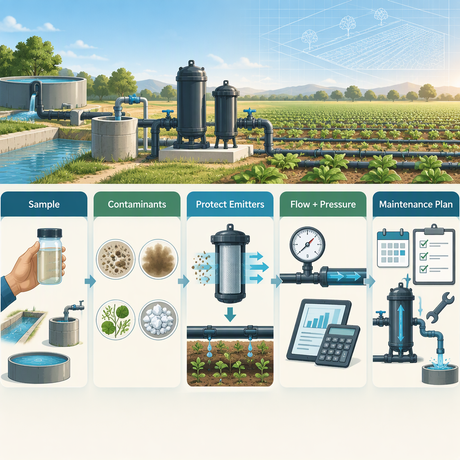
Solving emitter failure requires moving beyond reactive cleaning. You must understand your baseline water quality. Next, you need to implement appropriate filtration. Finally, you must establish proactive maintenance protocols. This guide explores how to identify blockages, evaluate remediation tactics, and upgrade your system for maximum reliability.
Water quality dictates the solution: Identifying whether the clog is physical, biological, or chemical is the required first step before applying any treatment.
Prevention outpaces rehabilitation: Upgrading to the correct filtration system (screen vs. disc) yields a higher ROI than recurring labor spent on manual unclogging.
Strategic replacement: In many commercial or large-scale scenarios, replacing degraded emitters is more cost-effective than chemical remediation.
Routine flushing is non-negotiable: Implementing a strict schedule for flushing mainlines and laterals prevents particulate accumulation.
Ignoring compromised emitters introduces massive hidden costs. A failing system impacts your entire operation. Uneven watering patterns emerge rapidly. Some plants suffer from severe drought stress. Others drown in oversaturated soil. You end up wasting gallons of water trying to compensate for the dry zones. This compensation inflates your utility bills. It also dilutes applied fertilizers, reducing their effectiveness.
Establishing target metrics keeps your system accountable. Industry standards demand high performance. We look at Distribution Uniformity (DU) to measure this success. DU measures how evenly water applies across your field or garden.
Target DU Metric: A healthy drip system maintains a DU greater than 90%.
Maintenance Threshold: Acceptable labor hours should focus on preventive flushing, not reactive scrubbing.
Yield Protection: Consistent moisture delivery prevents localized crop failure.
You must evaluate the "clean versus replace" threshold. Growers often trap themselves in a cycle of endless repairs. When your maintenance crew spends hours scrubbing tiny plastic parts, labor expenses explode. Troubleshooting individual emitters drains operational resources. You must weigh the hourly labor rate against equipment prices. Often, replacing the drip line becomes a smarter capital expense. New tubing guarantees a return to 90% DU immediately.
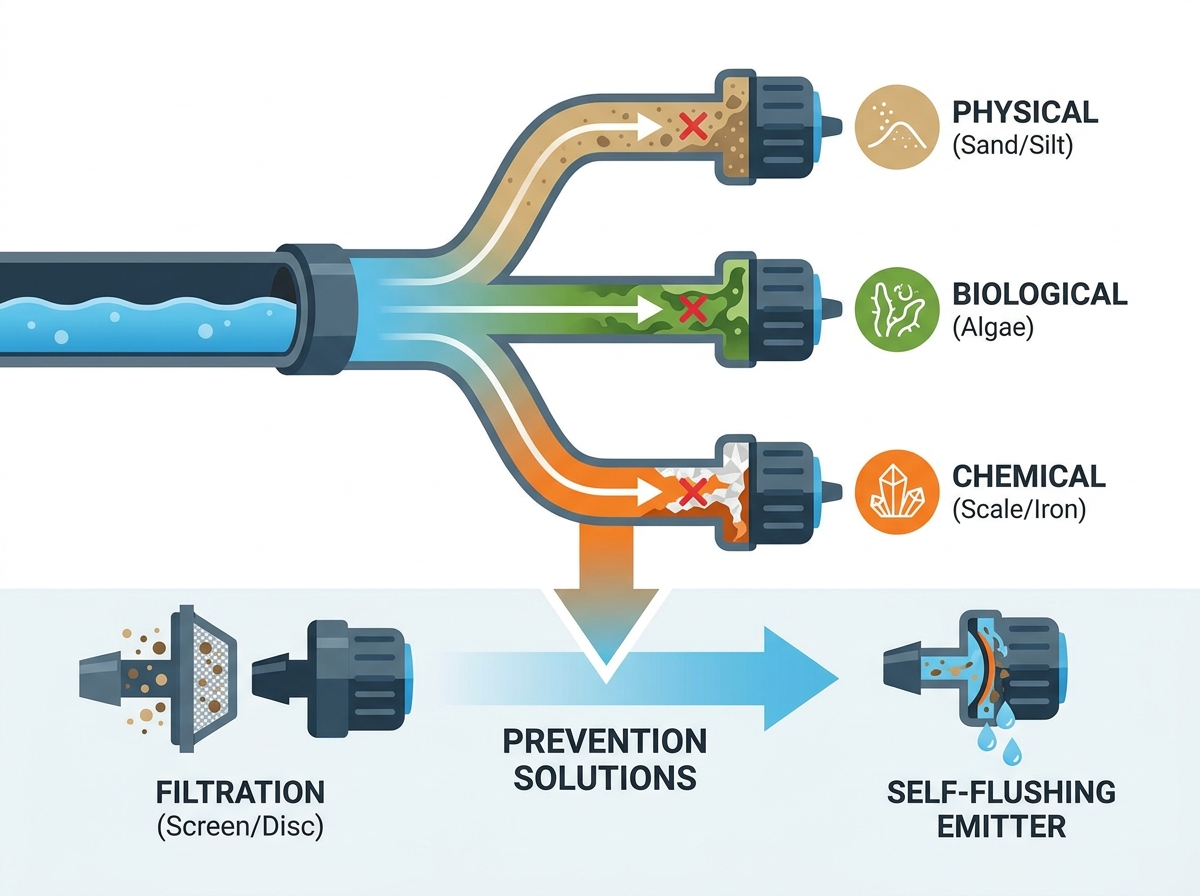
Understanding drip emitter clogging causes requires careful diagnostics. You cannot treat a problem without identifying the source. Evidence-based problem identification saves time and money. Blockages typically fall into three distinct categories. You must analyze your water source to predict these threats.
Physical clogs represent the most common system failure. These blockages occur frequently in systems drawing from wells. Rivers, ponds, and compromised municipal lines also carry heavy physical loads. Sand and silt bypass inadequate filters easily. They lodge directly into the narrow labyrinth of the emitter.
Indicators appear quickly. You will notice immediate clogging shortly after system startup. If you open the emitter housing, you will find visible grit. Rubbing the debris between your fingers reveals a coarse, sandy texture. This confirms physical particulate intrusion.
Biological contaminants thrive under specific conditions. They are highly prevalent in surface water sources. Ponds and shallow reservoirs breed these organisms. Systems exposed to intense sunlight and heat accelerate biological growth. Algae enters the system as microscopic spores. Once inside the dark, warm tubing, it feeds on residual fertilizers.
Indicators are highly visual. You will find green or brown organic buildup inside the lines. This slime feels slippery. The problem often worsens at the end of lateral lines. Water stagnates there, creating a perfect breeding ground for biofilms.
Chemical precipitation silently chokes your irrigation system. It stems directly from your water chemistry. Hard water contains high levels of calcium and magnesium. High iron or manganese levels also create severe risks. When these elements react with injected fertilizers, they precipitate. Temperature changes or pH shifts force dissolved minerals into solid forms.
Indicators feel distinctly different from physical grit. You will see crusty white deposits around the emitter orifice. This is calcium carbonate scale. Alternatively, you might find rusty orange deposits. These indicate iron oxidation. The buildup hardens over time, cementing the emitter shut.
Diagnostic Matrix for Emitter Blockages
Clog Category | Primary Water Source | Visual Indicator | Texture |
|---|---|---|---|
Physical Particulates | Wells, Rivers, Canals | Visible grit inside housing | Coarse, sandy, hard |
Biological Contaminants | Ponds, Surface Reservoirs | Green/brown buildup at ends | Slimy, soft, organic |
Chemical Precipitation | Hard Municipal Water, Deep Wells | Crusty white or rusty orange tips | Chalky, brittle, rigid |
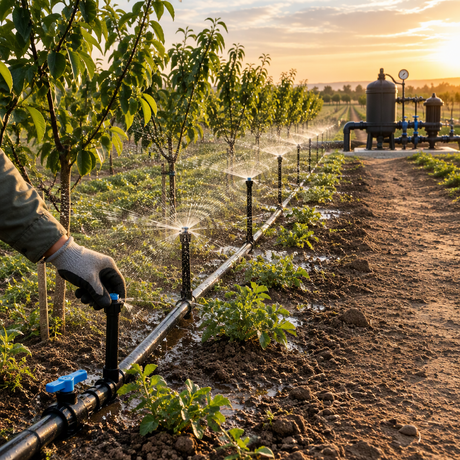
Growers frequently search for methods on how to unclog irrigation drippers. You need tactical solutions based on implementation realities. Safety and compliance matter deeply here. You cannot blindly dump chemicals into your lines. Proper evaluation prevents collateral damage to your soil and equipment.
Acid treatments attack chemical precipitation directly. They remain the best option for dissolving calcium carbonate and iron scale. Commercial growers use sulfuric, phosphoric, or citric acid to lower the water pH. Lowering the pH breaks down the mineral crust. However, implementation carries risks. You must monitor pH levels carefully. Dropping the pH too low damages system plastics. It ruins PVC and polyethylene components. Furthermore, excessive acid alters your soil chemistry, harming sensitive root zones.
Chlorination acts as the gold standard for biological clogs. Chlorine breaks down biological slime and destroys algae spores. Evaluating this method requires strict attention to concentration. You must balance the parts-per-million (PPM). A high concentration shocks the system clean. However, if the chlorine levels remain too high upon exiting the emitter, they burn plant roots. You need a targeted shock treatment followed by a thorough clean-water flush.
Sometimes, localized blockages require physical intervention. You can clear accessible emitters manually. This works well for small residential setups or highly specific trouble zones.
Isolate the zone: Turn off the water supply to the affected lateral line.
Remove the emitter: Pull the button emitter from the tubing or open the housing.
Clean the diaphragm: Rinse the internal silicone diaphragm with clean water.
Clear the orifice: Use a soft brush or compressed air to dislodge trapped grit.
Reassemble and test: Reattach the emitter and pressurize the line to confirm flow.
You must face an ROI reality check here. Acknowledging scale is critical. Manually cleaning hundreds of emitters is rarely viable. It wastes massive amounts of labor. For large systems, high-velocity system flushing serves as the only practical physical remediation. Flushing forces debris out the end of the line before it settles.
Remediation Efficacy Chart
Remediation Method | Best Suited For | Implementation Risk | Scalability |
|---|---|---|---|
Acid Injection | Calcium scale, Iron deposits | High (pH monitoring required) | Excellent for commercial sites |
Chlorine Shock | Algae, Biofilms, Slime | Medium (Root burn potential) | Excellent for all sizes |
Manual Cleaning | Isolated grit clogs | Low (Labor intensive) | Poor (Residential only) |
High-Velocity Flush | Sand, Silt, Loose debris | Low (Requires adequate pressure) | High (Standard protocol) |
Relying purely on remediation creates a reactive trap. You need infrastructure upgrades to stop problems at the source. Selecting the correct solution categories guarantees better outcomes. Feature-to-outcome mapping helps you purchase the right equipment.
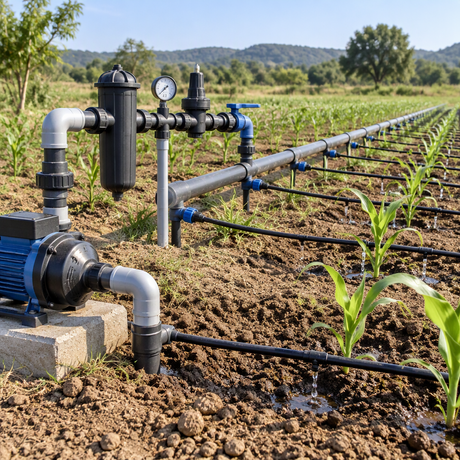
Filtration stands as your first line of defense. Selecting the wrong filter guarantees eventual failure. You must match the filter type to your specific water challenge.
Screen Filters: These provide cost-effective protection. They work best for inorganic, physical particulates like sand. The water passes through a stainless steel or plastic mesh. They rely on two-dimensional surface filtration. They clog quickly if exposed to heavy algae.
Disc Filters: These require a higher initial investment. However, they remain superior for organic matter. The stacked, grooved discs create three-dimensional depth filtration. Algae and slime get trapped within the grooves rather than smearing across a flat surface.
Media Filters: Commercial operations use media filters for heavy organic loads. They push water through thick beds of silica sand. This traps massive amounts of debris. They automatically backflush, making them ideal for dirty surface water.
Emitter technology advanced significantly over the last decade. Upgrading your emitters changes your baseline maintenance needs. Feature-to-outcome mapping reveals why modern emitters succeed.
Pressure-compensating (PC) emitters contain a flexible silicone diaphragm. This diaphragm reacts to water pressure. It expands and contracts to guarantee an identical flow rate. It performs uniformly whether it sits at the beginning or the end of a long field. More importantly, many PC emitters feature self-flushing mechanisms. During system startup and shutdown, pressure fluctuates. The diaphragm briefly opens wide, automatically clearing micro-debris before it lodges.
Scalability relies on this technology. Investing in PC, self-flushing emitters reduces long-term maintenance overhead. You standardize flow rates across varying topographies. You also ignore minor internal friction caused by small debris. The system essentially cleans itself daily.
Building trustworthiness into your irrigation management requires standard operating procedures. Long-term success relies on discipline. You cannot install advanced components and simply walk away.
Mandatory water testing forms the foundation of any strategy. You cannot guess your water chemistry. Investing in a comprehensive agricultural water analysis is the prerequisite for designing a clog-prevention strategy. The test reveals electrical conductivity (EC), pH, hardness, and specific mineral loads. If you know you have high iron, you install specialized iron filtration immediately. You avoid discovering the problem months later when your plants die.
Routine flushing schedules maintain line hygiene. You must establish weekly or monthly protocols. Open the end-caps on your mainlines first. Let the water run until clear. Then, move to your lateral lines. Open the ends and flush them sequentially. You need enough water velocity to scour the inside of the tubing. Aim for a flushing velocity of at least 1.5 feet per second. This lifts settled silt and ejects it safely.
Winterization presents massive downtime risks. Improper system shutdown destroys components. Leaving water trapped inside lines during winter encourages dormant biological growth. It also leads to severe calcification as trapped water slowly evaporates, leaving pure minerals behind. You must blow out your lines using an air compressor. Ensure the compressor volume is high, but keep the pressure (PSI) below the system's maximum rating to protect fittings.
Managing clogged emitters remains an ongoing infrastructural process, not a one-time fix. Your water quality constantly interacts with your system's hardware. You protect your crop yields and lower your labor hours by shifting from reactive scrubbing to proactive prevention. Properly filtered water paired with advanced emitter technology guarantees consistent performance across seasons.
To take control of your irrigation health, follow these next-step actions:
Test your primary water source immediately to identify hidden chemical or biological threats.
Audit your current filtration system and verify the mesh size aligns with your emitter orifice requirements.
Calculate the cost difference between repetitive chemical treatments and upgrading your lines to self-flushing emitters.
A: Household vinegar safely unclogs emitters for small residential systems. Its mild acetic acid dissolves light calcium deposits. You can soak removable emitters in pure vinegar overnight. However, vinegar lacks the concentration needed for commercial scale. Large agricultural setups require industrial acids like sulfuric or phosphoric to tackle heavy mineral scaling effectively.
A: Flushing frequency depends heavily on your water source. Systems drawing from clean municipal water may only need flushing twice a year. If you use well water, flush your lines monthly to remove sand and silt. Surface water sources like ponds require weekly flushing to prevent algae and biological slime buildup.
A: Yes, but you face severe implementation risks. High-volume air clears out water and light debris efficiently. However, you must regulate the pressure. If the compressor PSI exceeds your tubing or emitter ratings, you will blow out fittings. Excessive pressure also tears the internal silicone diaphragms inside pressure-compensating emitters.
A: No technology is foolproof. Self-cleaning emitters significantly reduce maintenance frequency. Their flexible diaphragms expel micro-debris during pressure shifts. However, they still require adequate upstream filtration. Large sand particles or severe chemical scaling can eventually overpower the self-flushing mechanism. You must use them alongside proper filters, not as replacements.